Case Study · Wellness App Design
Mood Tracker
A daily emotional awareness app that helps users log how they feel, understand their mood patterns over time, and build a lasting habit of mental self-care, one check-in at a time.
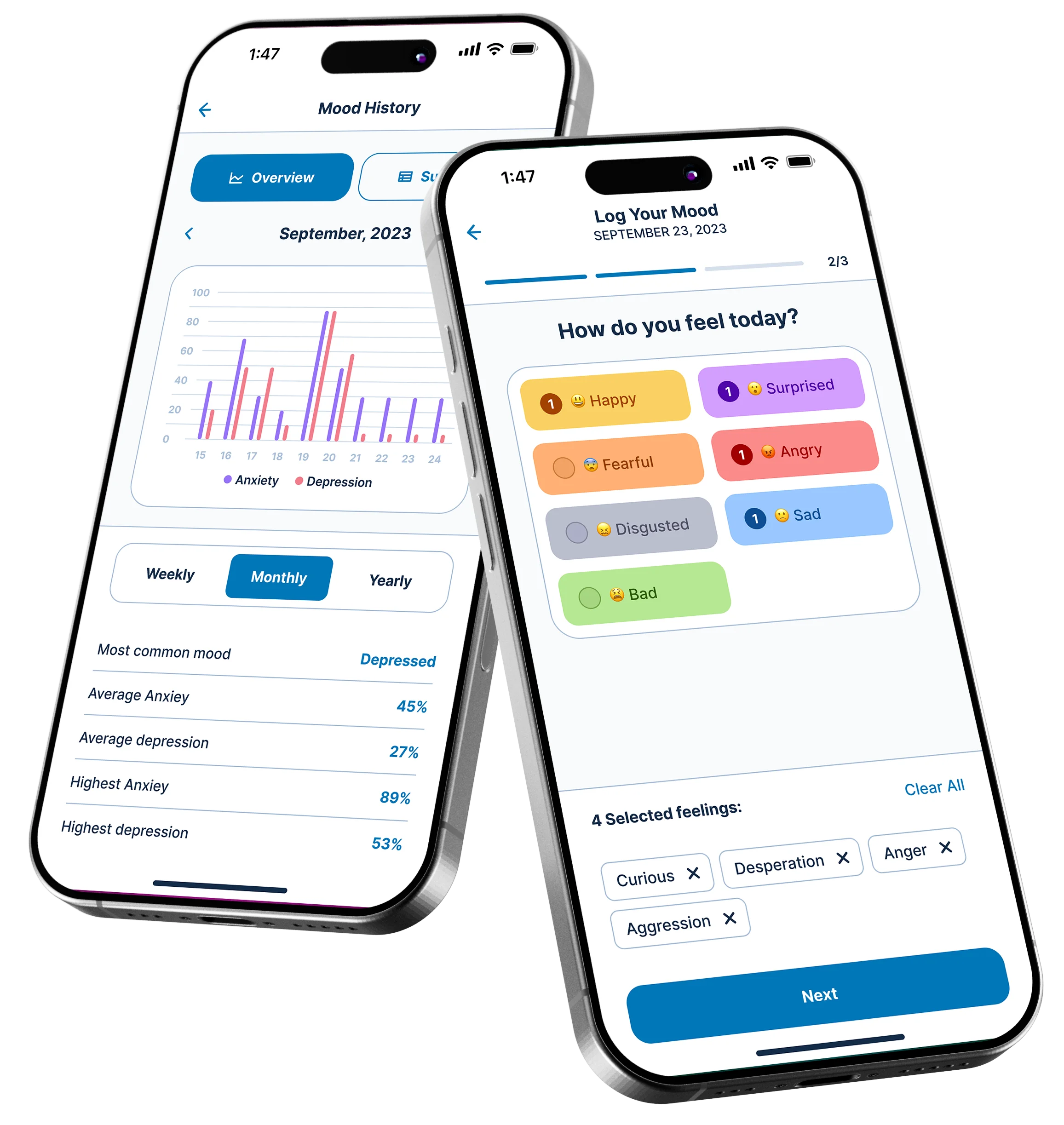
Make self-awareness a daily habit.
Most people have a vague sense of how they feel but no consistent way to track it. Mood Tracker was designed around one insight: the check-in needs to take under 60 seconds or users will not do it. Everything, the UI, the flow, the visual language, was built around that constraint.
Understanding Mood Tracker
Mood Tracker came to us with a clear mandate: build a check-in experience so frictionless that users actually return to it every day. The design challenge was subtler than it seemed. Minimal does not mean empty. Every element needed to earn its presence by reducing effort or increasing meaning.
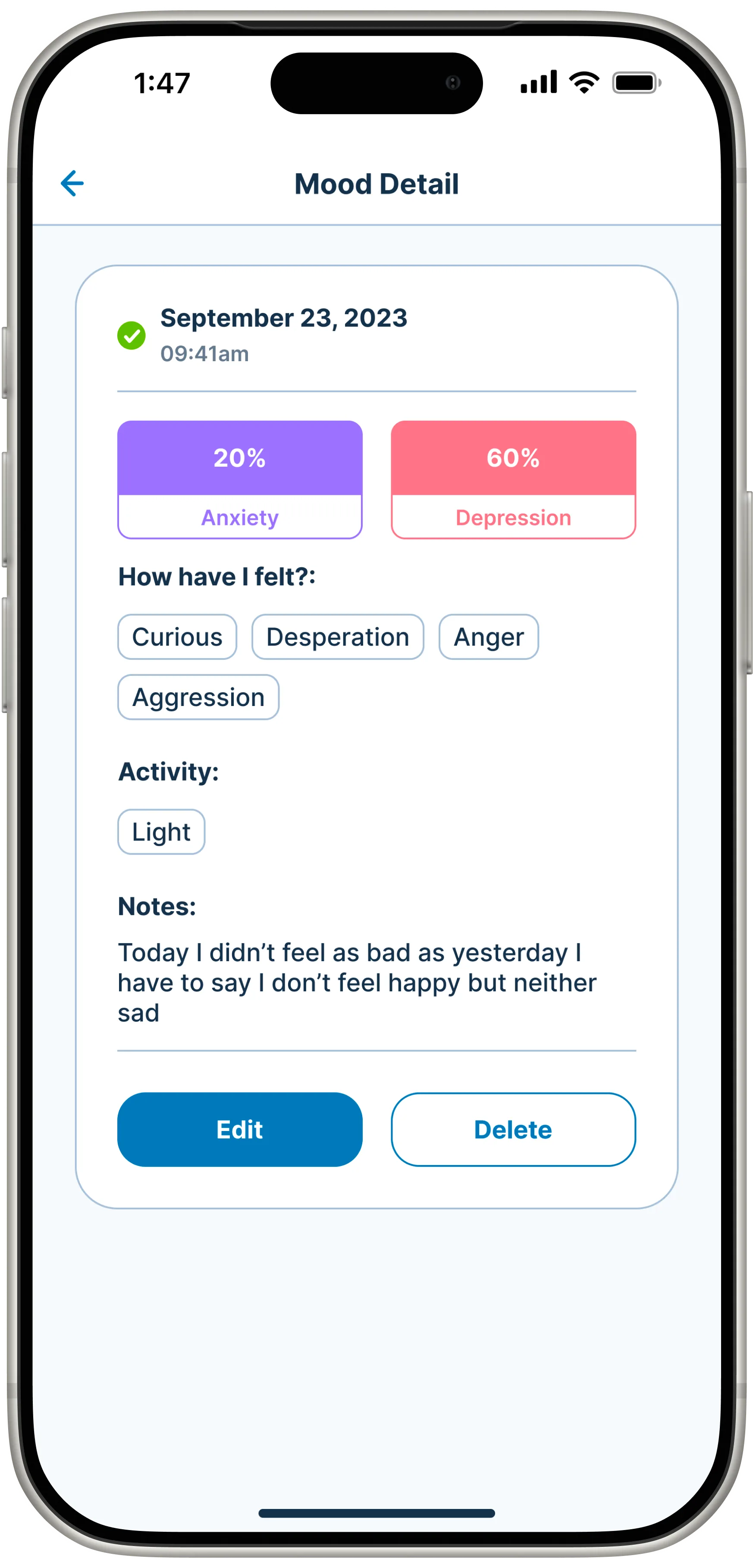
Knowing Who We're Designing For
Before designing a single screen, we mapped the competitive landscape, segmented the user base, built personas, traced the check-in journey, and defined user stories, so every design decision had a clear reason rooted in how real people actually feel about tracking their emotions.
Mapping the Market
Most mood apps either over-simplify tracking (emoji-only scales) or overwhelm with journaling prompts. None combine frictionless daily logging with meaningful long-term analytics in a design people want to return to.
| App | Daily Logging | Pattern Analytics | Emotion Tags | Streak System | Data Export |
|---|---|---|---|---|---|
| Daylio | Yes | Partial | Yes | Yes | Partial |
| Reflectly | Yes | No | Partial | No | No |
| Bearable | Yes | Yes | Yes | No | Yes |
| Finch | Yes | Partial | No | Yes | No |
| Mood Tracker | Yes | Yes | Yes | Yes | Yes |
Who Tracks Their Emotions
Four user groups emerged with different motivations, from building healthy habits to supporting active therapy, each requiring different levels of depth and data visibility.
20-35. Already use journaling, meditation, or habit apps. Want to add emotional tracking as part of a broader personal development practice.
22-45. Use the app alongside therapy. Need detailed logs and exportable data to make sessions more productive and evidence-based.
18-40. Proactively managing anxiety or depression. Use the app to catch warning patterns early and develop coping awareness.
25-42. Want dashboards, correlation data, and exportable insights. Treat emotional data the same way they treat fitness metrics.
Designing for Real People
Three archetypes shaped from 20 user interviews and 230 survey responses, each representing a distinct relationship with emotional data and a different set of design requirements.
"I started therapy six months ago but I can never remember how I felt during the week when my session comes around. I need something that tracks it for me."
"I track everything: sleep, workouts, diet. I want to track mood too but most apps feel either too clinical or too cute. I need something in between."
"I have been dealing with anxiety since I was 16. I do not need an app that diagnoses me, I just need one that helps me notice my patterns."
From Intention to Insight
The Mood Tracker journey is a daily loop that compounds over time. The design had to make each individual check-in feel worthwhile while building toward data-rich insights that reward long-term use.
- Step 01Intention: "I want to understand how I feel"
User recognizes a need for emotional self-awareness. They have tried journaling or meditation apps but found them too time-intensive to maintain daily.
Motivated - Step 02First check-in: Immediate and frictionless
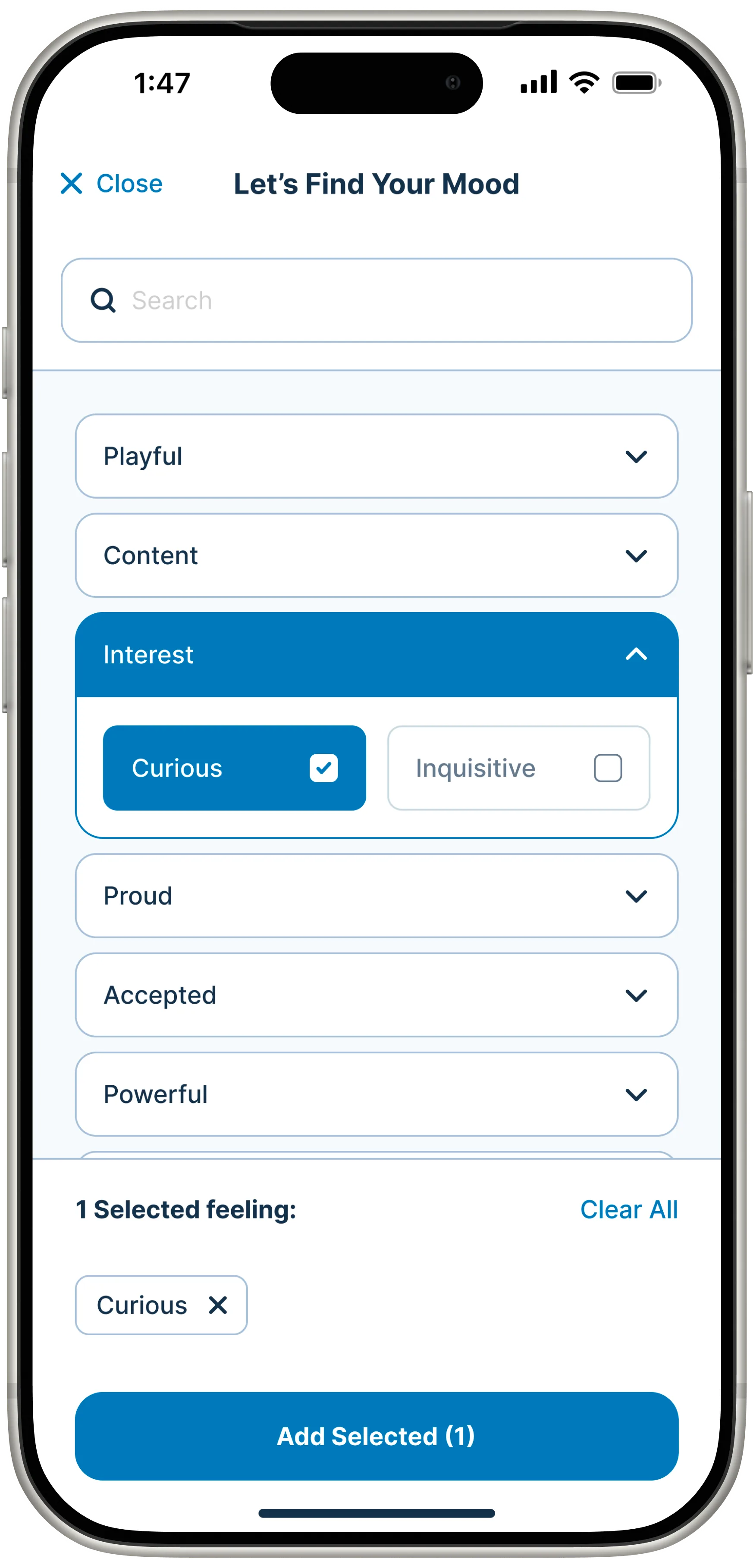
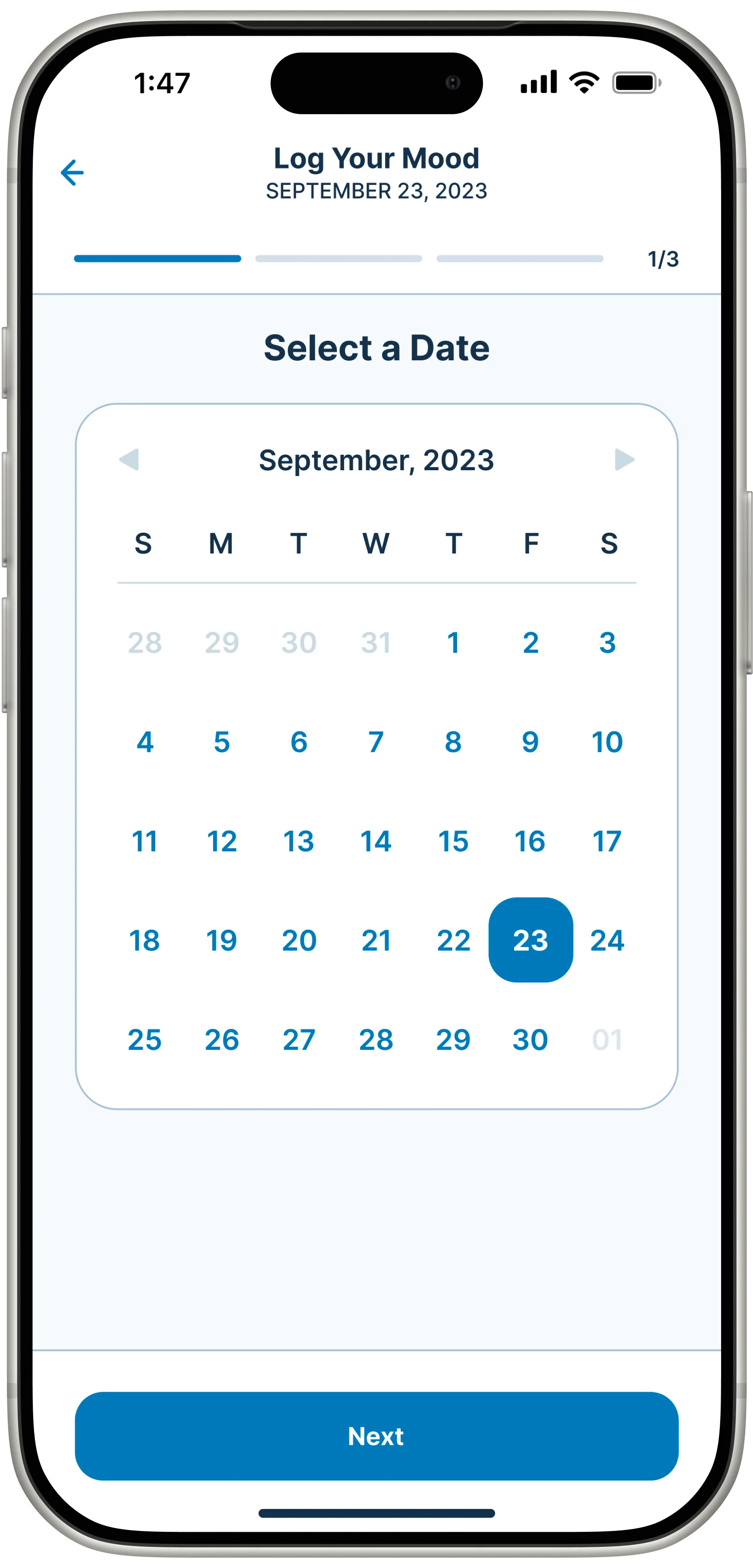
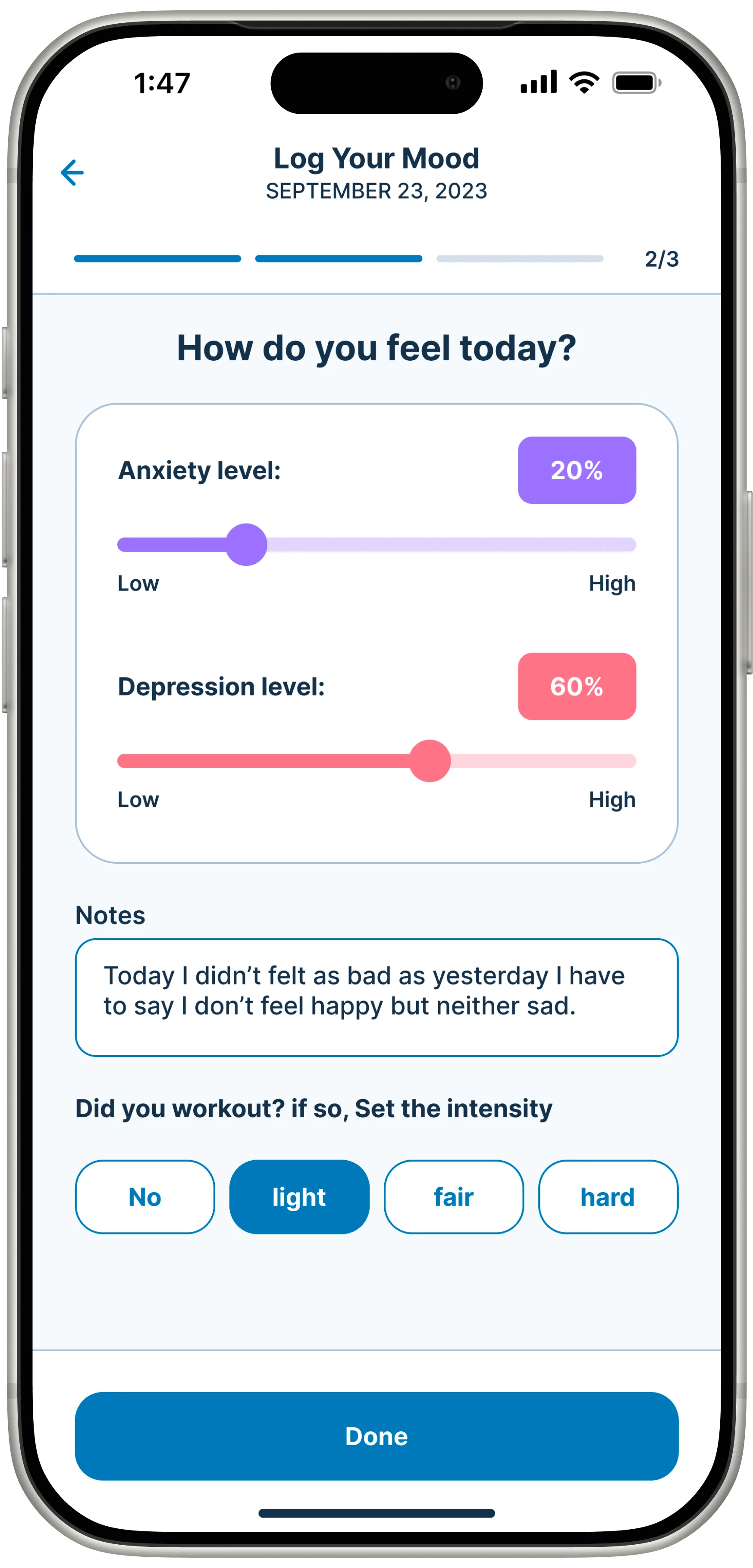
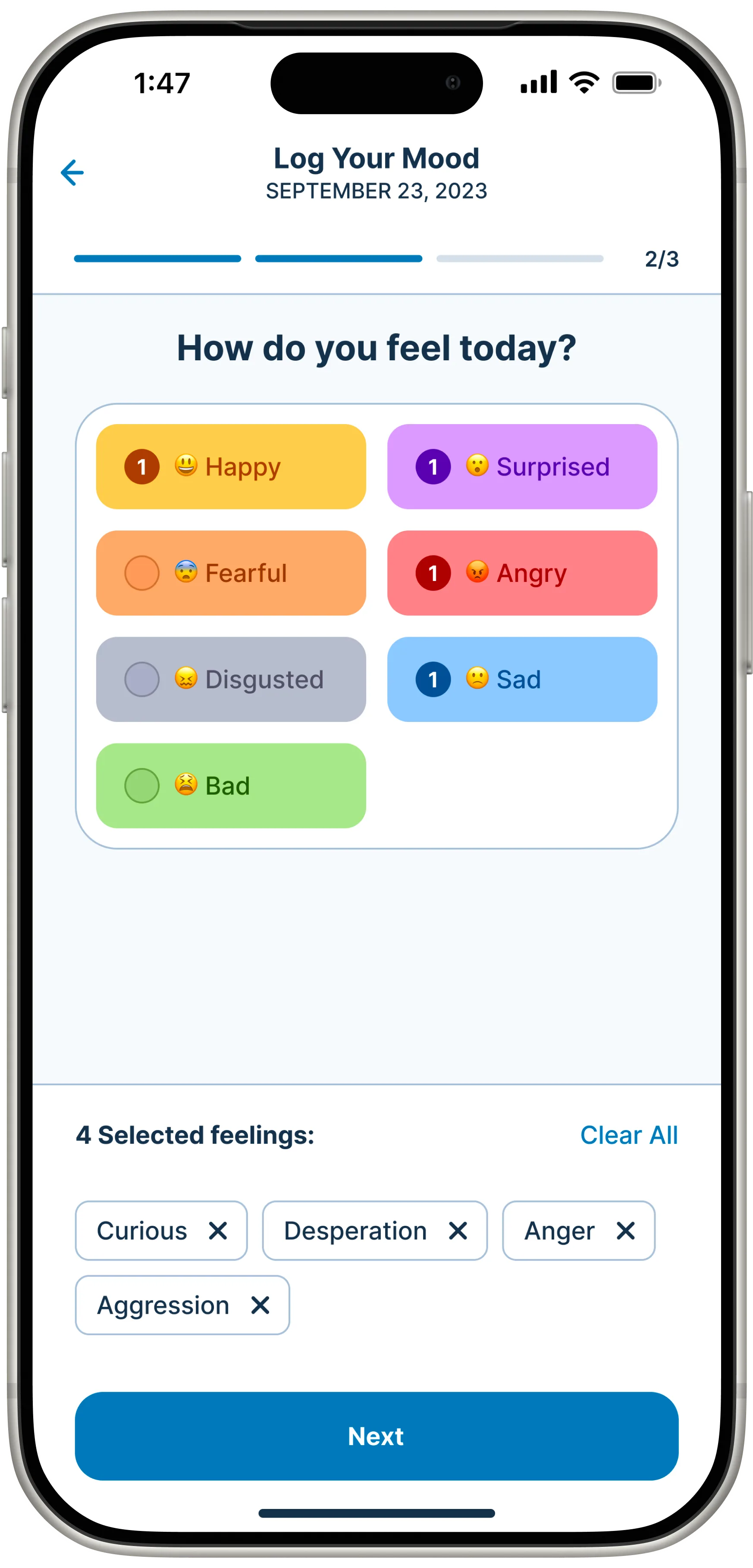
No registration required for the first entry. The user selects a mood, adds optional emotion tags, and is done in under 45 seconds. The value is felt immediately.
Surprised - Step 03Streak begins: Habit takes hold
After 3 consecutive check-ins, the streak counter becomes visible. A small celebration animation on day 7 reinforces the behavior without feeling infantilizing.
Engaged - Step 04First insight: "I see the pattern"
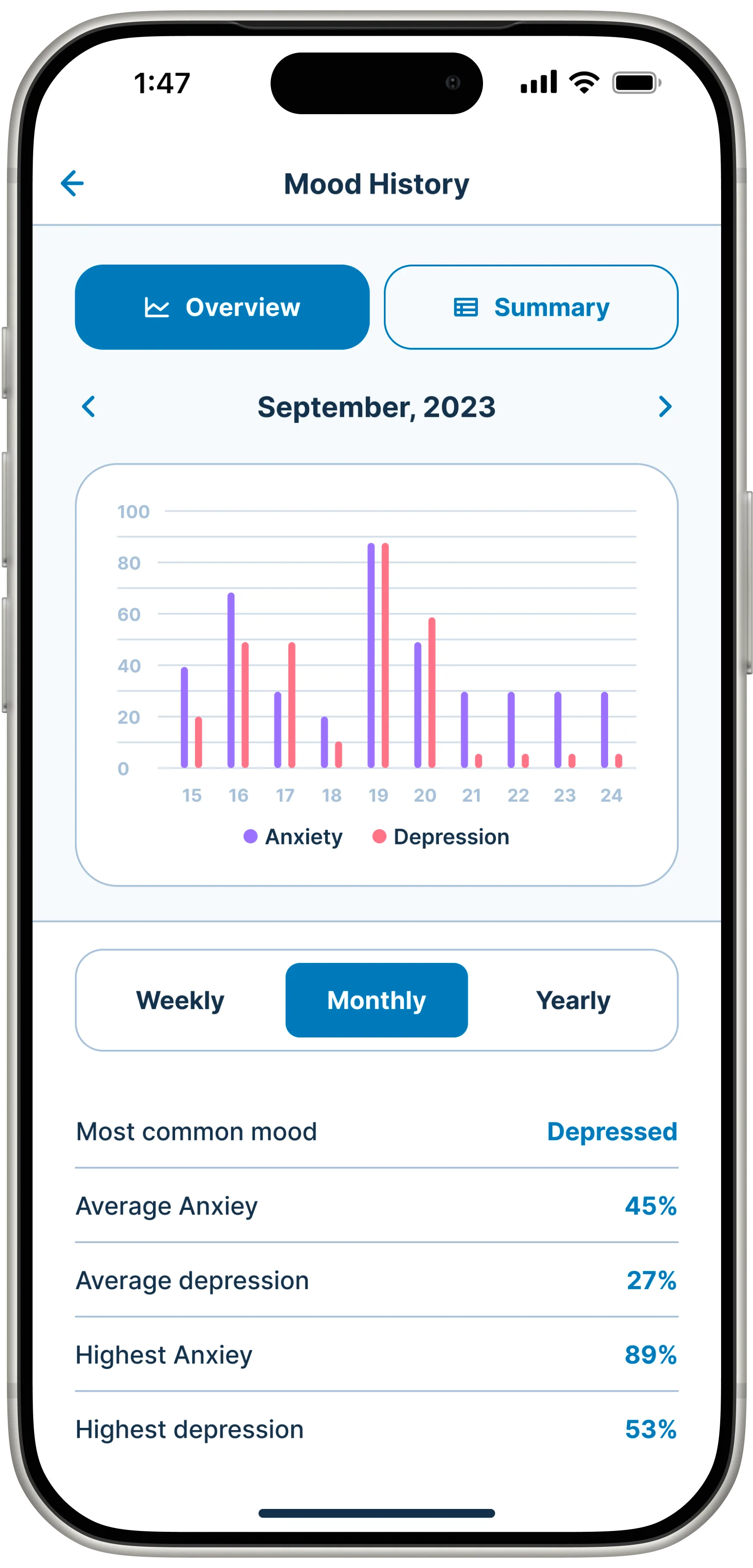
After two weeks, the Weekly View surfaces the first meaningful pattern. Many users describe this as the moment the app clicked for them.
Inspired - Step 05Deep use: Data export for therapy
Therapy users export a PDF summary before their session. The format is designed to be readable by both user and therapist: a functional clinical tool, not just a graph.
Empowered - Step 06Long-term: Mood Tracker as a daily anchor
At the six-month mark, users describe Mood Tracker as a non-negotiable part of their morning or evening routine. The streak becomes a source of quiet pride.
Grounded
What Users Actually Need
These stories governed every feature decision, ensuring the product stayed focused on reducing friction in the daily loop rather than adding features that would add cognitive load.
- US-01 As a therapy user, I want to log my mood in under 60 seconds every day, so it becomes a sustainable habit I can maintain even on my most demanding days.
- US-02 As a pattern seeker, I want to see weekly and monthly mood charts with correlation overlays, so I can identify what reliably triggers my best and worst emotional states.
- US-03 As an anxiety manager, I want to add custom emotion tags to each entry, so I can track specific feelings beyond a numeric scale and see which tags cluster together.
- US-04 As a committed user, I want a streak counter that celebrates consecutive check-in days, so I have a meaningful reason to maintain the habit even when I do not feel like it.
- US-05 As a therapy support user, I want to export my mood history as a formatted PDF or CSV, so I can share meaningful data with my therapist before each session.
- US-06 As a new user, I want to log my first entry without creating an account, so I can experience the core value of the app before deciding whether it is worth committing to.
Color, Type, and the Language of Emotion
For Mood Tracker, we chose a calm blue-and-violet system that communicates clarity, emotional range, and trustworthiness. An interface that feels as grounded as the habit it is trying to build.
(500) HEX #0476B6 Accessibility: 4.97:1 AA
(400) HEX #9573F7 Accessibility: 3.33:1 AA Large
(Black) HEX #101010 Accessibility: 21.0:1 AAA
(Blue 50) HEX #EBF5FB Accessibility: 17.0:1 AAA
Where We Landed
The core challenge was designing for a micro-interaction that happens 365 times a year. Every second of friction compounds into eventual abandonment. We stripped the check-in to its essence and gave the data layer enough depth that coming back always felt worthwhile.
Your product,
built right.
Mood Tracker proved that the hardest design problem in consumer apps shows up on the 50th day, long after the first impression has worn off. If you're building a habit-forming product, we know how to make it stick.